
Tegallalang or Jatiluwih: Which Bali Rice Terraces to Visit
Tegallalang is 20 minutes from Ubud, small, steep and busy, with swings and cafes on every ledge. Jatiluwih is a UNESCO-listed sweep of terraces in the hills of Tabanan, wider, cooler and calmer, but about two hours from the south. Pick by where you stay and how much time you have.
By Aleks & Ria Facts checked 28 November 2026 8 min read
- Tegallalang
- 20 minutes from Ubud, about IDR 25,000 to 50,000
- Jatiluwih
- About 2 hours from the south, IDR 75,000
- Best time
- Before 8am
- Allow
- 1 to 3 hours each
Some links are partner links: if you book through them we may earn a commission at no cost to you. Partners never choose what we recommend.
Bali’s rice terraces are not just scenery. They are worked by subak, the farmers’ water cooperatives that share irrigation from temple to field, a system UNESCO listed in 2012 as the Cultural Landscape of Bali Province. When you walk the paths, you are walking through someone’s farm, so stay on the trails, keep off the bunds that hold the water, and do not fly a drone over people working.
Two places draw almost everyone: Tegallalang near Ubud and Jatiluwih in the hills of Tabanan. They are very different visits.
Tegallalang and Jatiluwih compared
-
Where
- Tegallalang
- Gianyar, about 20 minutes north of Ubud
- Jatiluwih
- Tabanan, on the slopes of Mount Batukaru
-
From the south (Kuta, Seminyak)
- Tegallalang
- About 1.5 hours
- Jatiluwih
- About 2 hours
-
Size
- Tegallalang
- One steep valley, walked in an hour
- Jatiluwih
- About 270 hectares of terraces with marked trails
-
Ticket, foreign adult
- Tegallalang
- About IDR 25,000 to 50,000, depending on the entrance
- Jatiluwih
- IDR 75,000 (child IDR 50,000)
-
Extras
- Tegallalang
- Swings, nests and photo platforms, paid separately; farmers ask for small donations on some paths
- Jatiluwih
- Nothing compulsory beyond the ticket
-
Crowds
- Tegallalang
- Very busy from about 9am
- Jatiluwih
- Busy at the main viewpoints, quiet once you walk
-
UNESCO
- Tegallalang
- No
- Jatiluwih
- Yes, part of the 2012 listing
-
Best for
- Tegallalang
- A short stop on an Ubud day
- Jatiluwih
- Walking, space and the classic wide view
Prices are the latest reported figures for 2026 and can change; pay at the official counters.
Plan this trip
Partner links. Prices are approximate.
Tegallalang: close, steep and commercial
On the map: Tegallalang Rice Terrace (opens in a new tab)
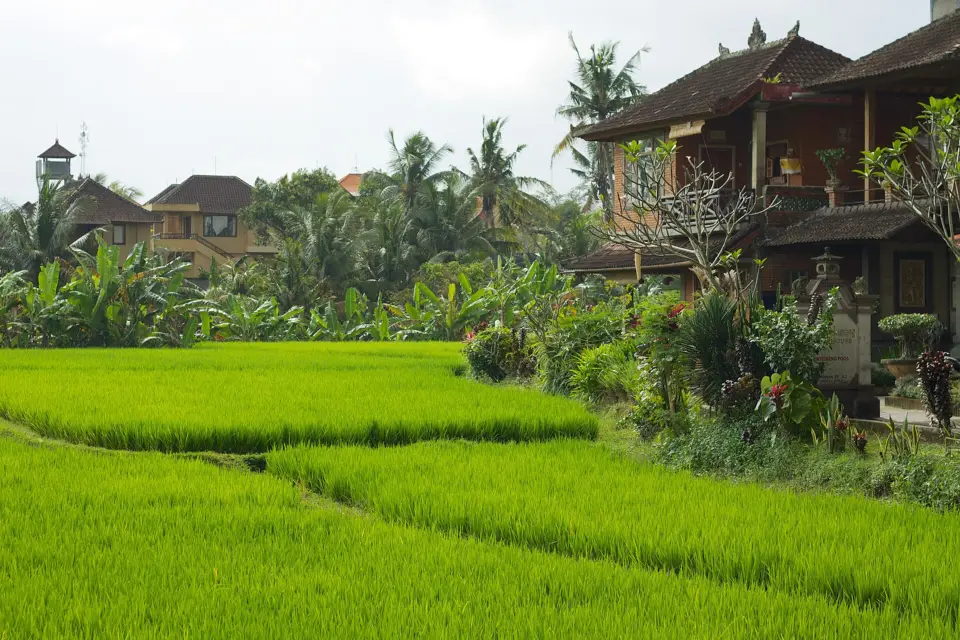
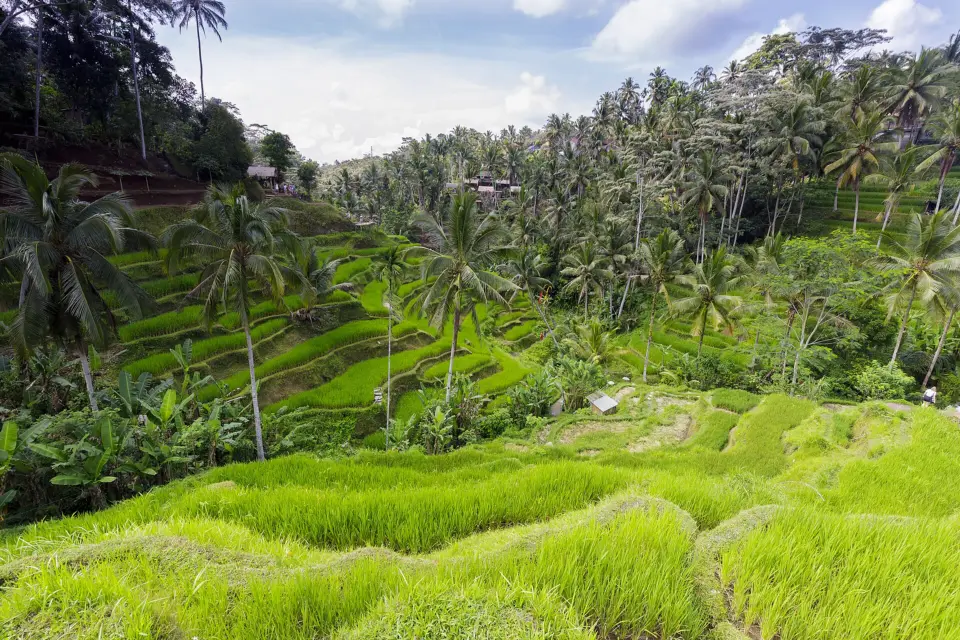
Tegallalang is the terrace you have seen in a thousand photos: a narrow valley with green steps falling to a stream and palms along the ridges. Cafes and shops line the road at the top, and the slopes are dotted with swings, bird’s nests and photo frames run by different businesses.
Tickets. Reports for 2026 vary from about IDR 25,000 to IDR 50,000 per person, because several entrances along the road (the main Ceking area, Pakudui and others) charge their own fee. Pay at a counter, keep the ticket, and expect a few farmers on the lower paths to ask for an extra small donation, often IDR 5,000 to 10,000, to cross their land. The swings are a separate business with their own prices, usually sold as a package with photos; ask the full price before you climb in.
How to visit. Arrive by 7.30 or 8am. By 10am tour buses and the queue at the famous swing fill the place, and the midday heat on the steps is hard work. The walk down to the stream and up the other side takes about an hour, with steep, uneven steps that get slippery after rain. Wear shoes with grip.
Combine it with the holy spring at Tirta Empul, 15 minutes further north, and lunch back in Ubud. Our Ubud guide and Tirta Empul guide have the details.
Jatiluwih: wide, quiet and UNESCO-listed
On the map: Jatiluwih Rice Terraces (opens in a new tab)
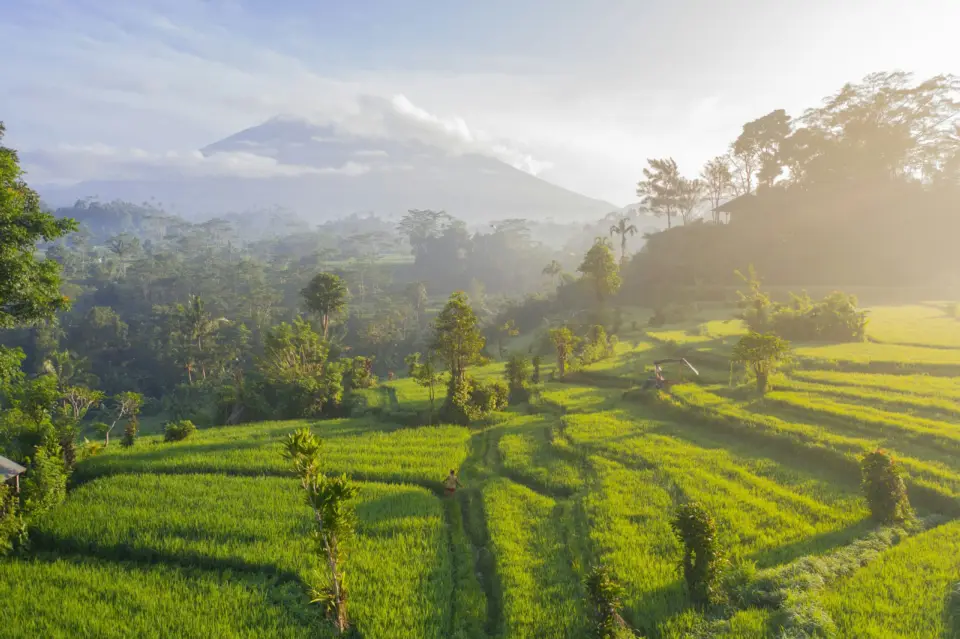
Jatiluwih (the name means “truly beautiful”) sits at about 700 metres on the slopes of Mount Batukaru. Terraces run across the hillside as far as you can see, the air is cooler than on the coast, and the walking trails let you leave the viewpoints behind in a few minutes. It is the core of the subak landscape UNESCO listed in 2012.
Tickets. Since 1 April 2025 foreign visitors pay IDR 75,000 per adult and IDR 50,000 per child. Indonesians pay IDR 25,000, and holders of a Bali ID card less. The ticket is bought at the gate on the road into the village and covers the trails.
Trails. Colour-coded routes start near the main restaurants and run from about 30 minutes to two or three hours. The short loops stay on paved paths; the longer ones follow narrow concrete irrigation channels and earth paths between fields. Take water and a hat, as there is little shade.
What is going on in 2026. In December 2025 the provincial assembly sealed 13 warung and restaurants built on protected farmland inside the UNESCO area, and some farmers protested by putting up corrugated iron sheets along the fields. After mediation by the Tabanan regent the sheets came down in January 2026, the regency announced a moratorium on new buildings and a land-tax exemption for subak farmers, and visitor numbers dipped for a while. The terraces are open as normal, but you may still see sealed buildings. It is a reminder that the view depends on farmers being able to make a living, so eat at the village warung and pay the ticket without haggling.
Combine it with Pura Luhur Batukaru, one of Bali’s main mountain temples, about 30 minutes away in the forest, or the lake temple at Bedugul. See our Ulun Danu Beratan and Bedugul guide.
Rice terraces worth the trip
-
Tegallalang Rice Terrace
Google Maps(opens in a new tab)- Area
- Tegallalang
- Cost
- About IDR 25,000 to 50,000
- Best time
- Before 8am
- Why go
- Close to Ubud, the classic photo
-
Jatiluwih Rice Terraces
Google Maps(opens in a new tab)- Area
- Jatiluwih
- Cost
- IDR 75,000
- Best time
- Morning
- Why go
- UNESCO, wide views, walking trails
-
Kajeng Rice Field
Google Maps(opens in a new tab)- Area
- Ubud
- Cost
- Free
- Best time
- Sunrise
- Why go
- A flat walk from central Ubud
-
Belimbing Rice Terraces
Google Maps(opens in a new tab)- Area
- Belimbing
- Cost
- Small donation
- Best time
- Morning
- Why go
- Quiet terraces on the road to Pupuan
-
Pura Luhur Batukaru
Google Maps(opens in a new tab)- Area
- Wongaya Gede
- Cost
- Temple donation, sarong needed
- Best time
- Morning
- Why go
- Forest temple near Jatiluwih
Sidemen in East Bali also has beautiful rice valleys without tickets; see our East Bali guide.
When to go
Time of day. Early morning everywhere: the light is soft, the paths are cool and you beat the buses. Jatiluwih often clouds over after midday in the wet season.
Season. Rice in Bali grows in cycles, not one fixed season, and different fields are at different stages. Terraces are greenest about one to two months after planting and turn gold in the weeks before harvest. Right after harvest, or when fields are flooded for planting, they look brown or silver. At Jatiluwih the main planting usually follows the rains, so the hillside is often greenest from about January to April and again mid-year; ask your driver or hotel what stage the fields are at that week.
Rain. Both places are open in the rainy season (November to March), but paths get muddy and slippery, and views can disappear in cloud. Go in the morning, when showers are less likely.
Which one should you choose?
- You are staying in Ubud and have half a day: Tegallalang early, then Tirta Empul.
- You want to walk and have a full day: Jatiluwih, with Batukaru temple or Bedugul.
- You hate crowds and paid swings: Jatiluwih, or the Kajeng walk in Ubud, or Sidemen.
- You are travelling with small children: Jatiluwih’s short paved loop is easier than Tegallalang’s steep steps.
- You have time for both: do Tegallalang on an Ubud day and Jatiluwih on a day trip from the south or on the way to the north.
Drive times
-
Ubud
- To Tegallalang
- About 20 to 30 minutes
- To Jatiluwih
- About 1.5 hours
-
Seminyak or Canggu
- To Tegallalang
- About 1.5 hours
- To Jatiluwih
- About 1.5 to 2 hours
-
Kuta or the airport
- To Tegallalang
- About 1.5 hours
- To Jatiluwih
- About 2 hours
-
Sanur
- To Tegallalang
- About 1 hour
- To Jatiluwih
- About 1.5 to 2 hours
-
Bedugul
- To Tegallalang
- About 1.5 hours
- To Jatiluwih
- About 45 minutes to 1 hour
Our planning estimates without heavy traffic. A private driver for the day usually costs about IDR 650,000 to 1,000,000.
One day, both terraces
-
6.30am
- Stop
- Leave Ubud
-
7am to 8.30am
- Stop
- Tegallalang before the buses
-
9am to 10.30am
- Stop
- Tirta Empul
-
12pm
- Stop
- Drive west; lunch on the way
-
2pm to 4.30pm
- Stop
- Jatiluwih, short trail and coffee with a view
-
6pm to 7pm
- Stop
- Back in Ubud or on to the south
It is a long day of driving. Splitting the two across different days is more relaxing.
Before you go
Your ticks are saved on this device.
Bring
On the terraces
Make it an easy day
A driver who waits lets you get to the terraces before the crowds and move on when you are ready.
Partner links. Prices are approximate.
Read next: the best things to do in Ubud, the best day trips in Bali and the best photo spots in Bali.
Rice terrace questions
Which is better, Tegallalang or Jatiluwih?
Jatiluwih is bigger, quieter and UNESCO-listed, with real walking trails. Tegallalang is much closer to Ubud and fine for an hour if you arrive early. If you can only fit in one and have a full day, choose Jatiluwih.
How much is the Jatiluwih entrance fee?
IDR 75,000 for foreign adults and IDR 50,000 for foreign children since April 2025. Indonesians pay less.
How much does Tegallalang cost?
About IDR 25,000 to 50,000 per person in 2026, depending on the entrance, plus small donations on some paths. Swings and photo platforms are paid separately.
What is the best time to visit the rice terraces?
Early morning, before 8am. For colour, the terraces are greenest about a month or two after planting; ask locally which stage the fields are at.
Is Jatiluwih still open after the protests?
Yes. The iron sheets farmers put up in December 2025 were taken down in January 2026, and the terraces and trails are open as usual.
How long do you need at the terraces?
About an hour at Tegallalang and two to three hours at Jatiluwih if you walk a trail.
Ready to book?
The usual order: flights, first nights, airport pickup, insurance, data.
Partner links. Prices are approximate.
Official sources
- Gianyar Regency Government(opens in a new tab)
- Tabanan Regency Government(opens in a new tab)
- UNESCO: Cultural Landscape of Bali Province(opens in a new tab)
- Indonesia Travel(opens in a new tab)
Updated

Aleks & Ria
Authors of ogo!bali
Built by an expat and an Indonesian local, ogo!bali delivers clear, fresh advice from both sides of the island. We blend local insider secrets with practical travel tips to help you explore with confidence.