



Balinese Food: 10 Dishes to Try and How to Order Them
Balinese food is not the same as Indonesian food. Here are the dishes worth finding, what they cost and when to eat them.
By Aleks & Ria Facts checked 11 November 2026 4 min read
- Signature dish
- Babi guling
- Warung meal
- IDR 25,000 to 50,000
- Eat babi guling
- At lunchtime
- Spice check
- Ask for sambal on the side
Some links are partner links: if you book through them we may earn a commission at no cost to you. Partners never choose what we recommend.
Many visitors eat smashed avocado for a week and never meet real Balinese cooking. It is bold, layered and built on base genep, a spice paste of ginger, turmeric, galangal, chilli and more. Much of it comes from ceremony food, so several classics are made in the morning and gone by mid-afternoon.
Plan this trip
Partner links. Prices are approximate.
10 dishes to look for
-
Babi guling
- What it is
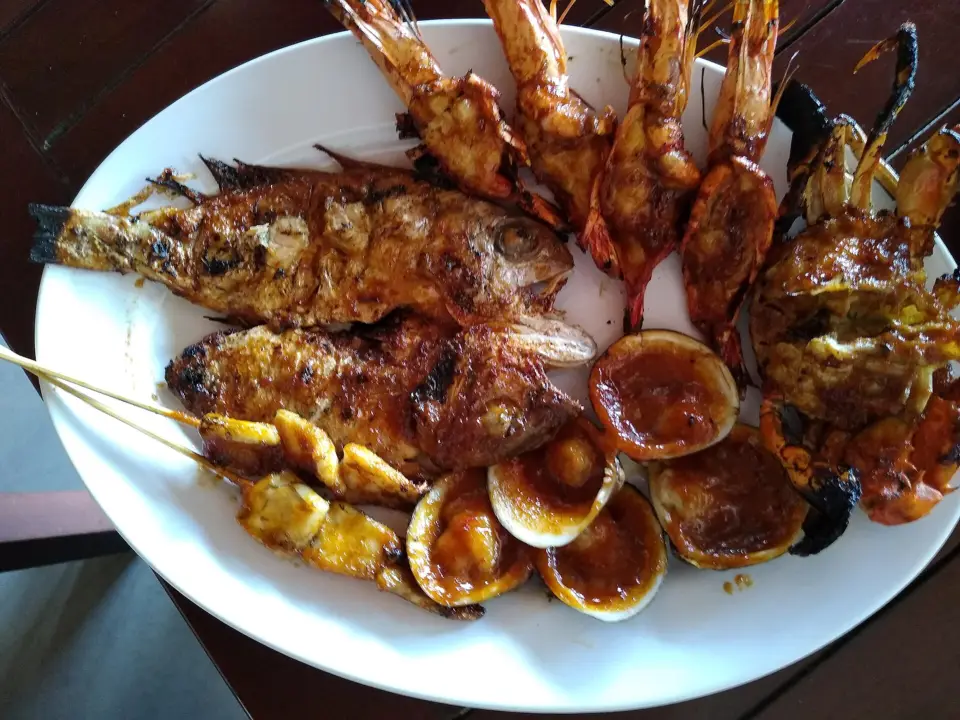
- Spit-roast suckling pig with spices
- Good to know
- Pork. Warungs often sell out by early afternoon
-
Bebek betutu
- What it is
- Spiced duck slow-cooked in leaves
- Good to know
- Some places need an order in advance
-
Ayam betutu
- What it is
- The chicken version
- Good to know
- Easier to find
-
Lawar
- What it is
- Chopped vegetables, coconut, spices, often meat
- Good to know
- Some versions contain fresh blood, so ask
-
Sate lilit
- What it is
- Minced fish or meat on lemongrass
- Good to know
- Fragrant and mild
-
Nasi campur
- What it is
- Rice with mixed small dishes
- Good to know
- The best first order
-
Nasi jinggo
- What it is
- Small banana-leaf rice parcel
- Good to know
- Cheap street snack
-
Sambal matah
- What it is
- Raw shallot and lemongrass relish
- Good to know
- Bali’s best-known sambal
-
Jukut ares
- What it is
- Banana-stem soup
- Good to know
- Light ceremonial dish
-
Pisang rai or klepon
- What it is
- Sweet coconut snacks
- Good to know
- Find them at morning markets
Prices vary: a plate at a warung is often IDR 25,000 to 50,000, and betutu dishes cost more.
How to eat at a warung
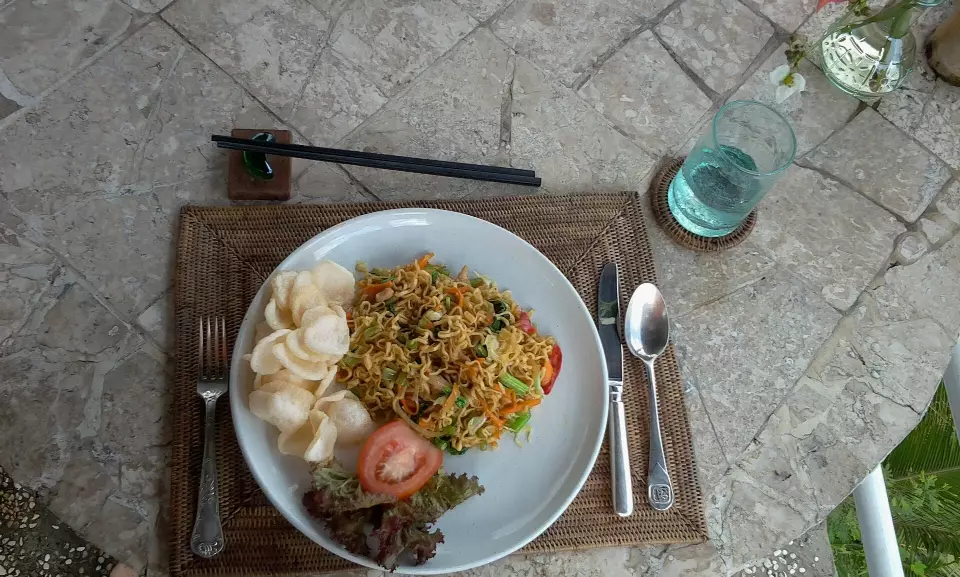
A warung is a small family eatery, usually with a glass case of dishes. Point at what you want and it goes on rice, and you pay at the end, in cash. Prices may not be displayed, but they are normally fair. Many close once the food runs out.
Names that come up again and again
Food guides regularly mention Ibu Oka in Ubud for babi guling, Warung Wardani in Denpasar for nasi campur, and Bebek Bengil in Ubud for crispy duck. Fame can bring crowds and higher prices, and some readers prefer a busy neighbourhood warung. A full table of locals at noon is the most reliable review.
Vegetarians and allergies
Nasi campur without meat is usually possible, and tempeh and tofu are everywhere. Sate lilit and lawar are generally not vegetarian, and many sambals contain shrimp paste (terasi). Useful phrases are tanpa daging (without meat) and tanpa terasi (without shrimp paste). Our home page phrases cover more.
Learn to cook it
A market visit and cooking class is one of the best ways in.
Partner links. Prices are approximate.
Phrases that help at a warung
-
Yang ini, satu
- Meaning
- This one, one portion
-
Tidak pedas or sedikit pedas
- Meaning
- Not spicy, or a little spicy
-
Tanpa daging
- Meaning
- Without meat
-
Tanpa terasi
- Meaning
- Without shrimp paste
-
Bungkus
- Meaning
- To take away
-
Berapa?
- Meaning
- How much?
-
Enak sekali!
- Meaning
- Delicious!
-
Sudah, terima kasih
- Meaning
- That is all, thank you
Say "pedas" with care: a little spicy in Bali is often very spicy elsewhere.
Breakfast, drinks and sweets
Balinese mornings start early. Bubur (rice porridge) and nasi jinggo are sold from carts before 8 AM, and morning markets are the place for jaja, the colourful rice cakes made for offerings. Klepon, green balls filled with palm sugar, burst when you bite them.
For drinks, try es kelapa muda (young coconut), jamu (a turmeric and tamarind tonic sold in bottles) and kopi Bali, strong local coffee with the grounds left in the cup. Our Bali coffee guide explains Kintamani beans and why to skip kopi luwak. Arak, the local palm spirit, is safe from licensed producers with labelled bottles, but the government warns about illegal spirits, so never drink it from an unlabelled bottle.
How spicy is it?
Heat lives mostly in the sambal, served on the side, so you can control it. Dishes cooked in base genep are aromatic rather than burning. If you are worried, order sambal terpisah (sambal on the side).
Where to try each dish
-
Babi guling
- Good areas to look
- Ubud, Gianyar, Denpasar
-
Bebek and ayam betutu
- Good areas to look
- Ubud, Gilimanuk, Gianyar
-
Sate lilit and fish
- Good areas to look
- Jimbaran, Kedonganan, Amed
-
Nasi campur
- Good areas to look
- Everywhere, Denpasar warungs are the most local
-
Nasi jinggo
- Good areas to look
- Denpasar and Kuta, sold late at night
-
Jaja and klepon
- Good areas to look
- Morning markets in Ubud, Sanur and Denpasar
Our [street food and night markets guide](/bali-street-food-night-markets/) covers the markets, and the [cooking classes guide](/bali-cooking-classes/) shows where to learn these dishes.
Balinese food FAQ
What is the most famous food in Bali?
Babi guling, the spit-roast suckling pig, is the signature dish.
Is Balinese food spicy?
Often, especially the sambal. Ask for it on the side if you are unsure.
Is halal food easy to find in Bali?
Yes, many Muslim-run warungs serve halal food, but much Balinese food contains pork, so ask or look for a halal sign.
Is it safe to eat at warungs?
Busy ones are usually fine. Choose freshly cooked food and places with fast turnover.
What should I order at a warung for the first time?
Nasi campur. You point at a few dishes and they go on rice, so you can try several things at once for little money.
Is arak safe to drink in Bali?
Only from licensed producers in labelled bottles at reputable venues. Illegal spirits can contain methanol, which cannot be tasted or smelled.
Ready to book?
The usual order: flights, first nights, airport pickup, insurance, data.
Partner links. Prices are approximate.
Updated

Aleks & Ria
Authors of ogo!bali
Built by an expat and an Indonesian local, ogo!bali delivers clear, fresh advice from both sides of the island. We blend local insider secrets with practical travel tips to help you explore with confidence.