

Surfing in Bali: Spots by Level, Seasons, Lessons and Reef Safety
Learn on the sand at Kuta or the soft waves of Canggu, and leave the Bukit reefs until you can really read a wave. The season decides which coast works, so match your base to the month.
By Aleks & Ria Facts checked 8 November 2026 9 min read
- First lesson
- Kuta or Batu Bolong
- West coast season
- About April to October
- East coast season
- About November to March
- 2-hour group lesson
- Often about $20 to $33
Some links are partner links: if you book through them we may earn a commission at no cost to you. Partners never choose what we recommend.
Bali has waves for almost everyone, but they are not all in the same place. Soft sandy beach breaks sit a few minutes from world-famous reef waves, and the gap between them is large. Most bad days here come from picking a spot above your level or the wrong coast for the month.
Plan this trip
Partner links. Prices are approximate.
So start with two questions: how well do you surf, and when are you coming? The table below answers the first, and the season section answers the second. Conditions change daily with swell, wind and tide, so use this to plan, then ask a local school or check a surf forecast before you paddle out.
Bali surf spots by level
-
Kuta and Legian
- Area
- South-west
- Level
- Beginner
- Bottom
- Sand
- Best season
- About March to November
-
Double Six
Google Maps(opens in a new tab)- Area
- Seminyak
- Level
- Beginner on small days
- Bottom
- Sand
- Best season
- About March to November
-
Batu Bolong and Old Man’s
- Area
- Canggu
- Level
- Beginner, longboard
- Bottom
- Sand and rock
- Best season
- Dry season
-
Berawa
Google Maps(opens in a new tab)- Area
- Canggu
- Level
- Intermediate
- Bottom
- Mixed
- Best season
- Dry season
-
Baby Padang
Google Maps(opens in a new tab)- Area
- Bukit
- Level
- Confident beginner, small days only
- Bottom
- Shallow reef
- Best season
- Dry season
-
Balangan
Google Maps(opens in a new tab)- Area
- Bukit
- Level
- Intermediate to advanced
- Bottom
- Reef
- Best season
- Dry season
-
Medewi
Google Maps(opens in a new tab)- Area
- West Bali
- Level
- Intermediate
- Bottom
- Rock and reef
- Best season
- Dry season
-
Serangan
Google Maps(opens in a new tab)- Area
- South-east
- Level
- Intermediate
- Bottom
- Reef
- Best season
- Wet season, less reliable
-
Nusa Dua
Google Maps(opens in a new tab)- Area
- East Bukit
- Level
- Intermediate to advanced
- Bottom
- Reef
- Best season
- Wet season
-
Echo Beach
Google Maps(opens in a new tab)- Area
- Canggu
- Level
- Advanced
- Bottom
- Shallow reef
- Best season
- Dry season, mid to high tide
-
Bingin
Google Maps(opens in a new tab)- Area
- Bukit
- Level
- Advanced
- Bottom
- Shallow reef
- Best season
- Dry season
-
Keramas
Google Maps(opens in a new tab)- Area
- East coast
- Level
- Advanced
- Bottom
- Reef
- Best season
- Wet season
-
Uluwatu
Google Maps(opens in a new tab)- Area
- Bukit
- Level
- Advanced to expert
- Bottom
- Reef
- Best season
- Dry season
-
Padang Padang
Google Maps(opens in a new tab)- Area
- Bukit
- Level
- Expert
- Bottom
- Very shallow reef
- Best season
- Dry season, big swells
Levels are a general guide, drawn from surf schools and surf guides. A small day at an advanced spot and a big day at an easy one can feel completely different.
When to surf which coast
Bali’s surf follows the wind. In the dry season, roughly April to October, the south-east trade winds blow offshore on the west side of the island. That is when the Bukit and Canggu are at their best, and when the biggest swells arrive. It is also the busiest time in the water, especially in July and August.
In the wet season, roughly November to March, the wind turns around. It tends to blow onshore at the west coast and offshore at the east coast, so Keramas, Serangan and the reefs off Nusa Dua and Sanur take over. Sources put the changeover at slightly different dates, and the shoulder months can go either way.
Beginners can surf for most of the year, but the months matter. Kuta and Legian are at their best from about March to November. From around December to February, many schools move their lessons to the east side when the wind turns. Ask your school where they will take you before you book a room next to the beach. Our best time to visit guide covers the weather, crowds and prices month by month.
One date to know: on Nyepi, which falls on 8 March 2027, everyone stays indoors and nobody goes to the beach, surfers included.
If you are a beginner
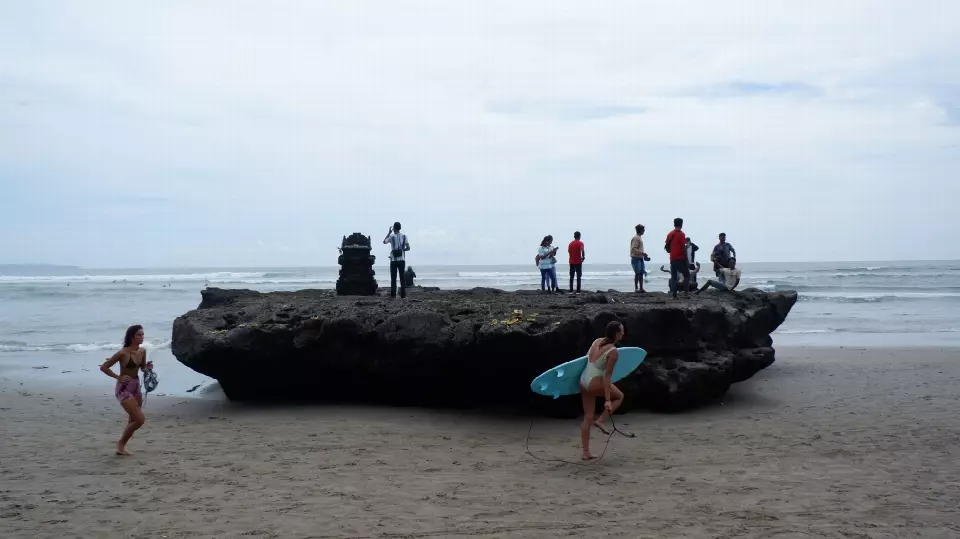
Start on sand. Kuta and Legian are the classic first choice, with a sandy bottom, a long beach and schools along the whole stretch. Batu Bolong in Canggu has soft waves and a great social scene, but it gets very crowded, and boards collide when too many lessons share a small area. Double Six in Seminyak is a good option on small days, at about mid to high tide.
Book a morning lesson, when the wind is usually lighter and the water is quieter. Two or three lessons on consecutive days will teach you far more than one lesson alone, as most people only start to stand reliably after a few sessions.
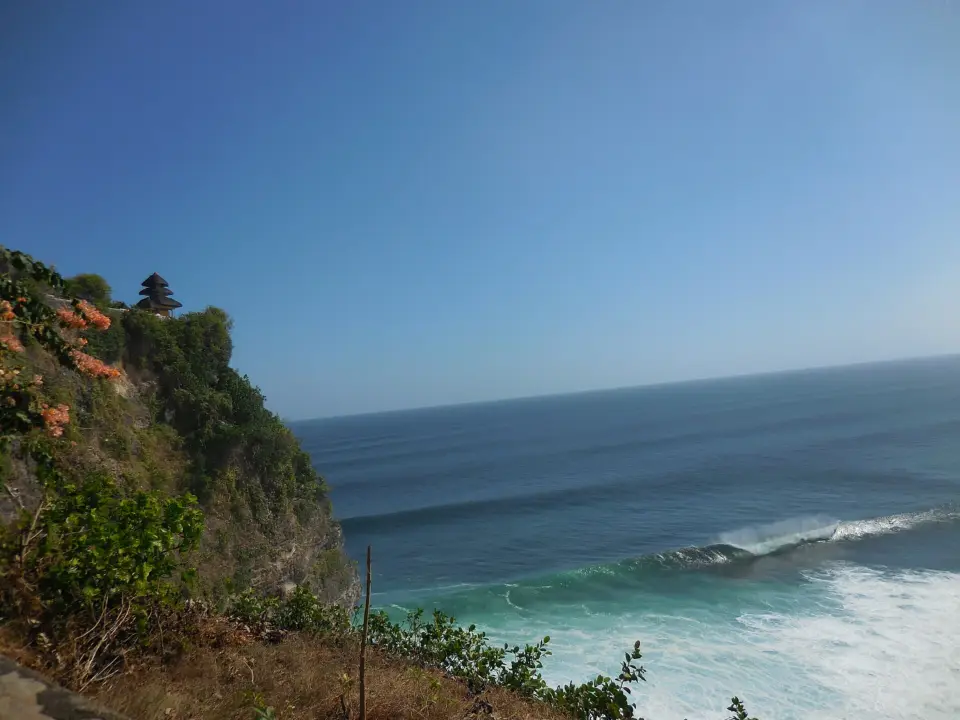
Skip Sanur for your first lesson. The waves there break far out on the reef, and you need a boat to reach them. The same goes for the main Bukit breaks. Uluwatu looks beautiful from the cliff, but it is the wrong place to learn.
What lessons and boards cost
-
Group lesson, 2 hours
- Reported price
- About $20 to $33
- Good to know
- Usually includes the board and rash vest
-
Local school, 2 hours
- Reported price
- About IDR 450,000
- Good to know
- Look for no more than 3 students per coach
-
Package with pickup
- Reported price
- Up to about $45
- Good to know
- Check that the coach is certified
-
Board rental
- Reported price
- About $3.50 to $6 an hour
- Good to know
- Often cheaper by the day, so ask
Prices come from school and booking listings, which vary by date and time slot and may be out of date. Confirm before you pay.
Book your first session
Compare a few schools and ask how many students share one coach.
Partner links. Prices are approximate.
How to pick a good school
-
1
Ask about the ratio
Three students per coach or fewer matters more than a low price.
-
2
Ask which beach and when
A good school picks the spot by tide and wind, not by what is closest.
-
3
Check the coach
Ask about lifesaving or first aid training, and whether the coach stays in the water with you.
-
4
Look at the boards
A big soft-top board is right for your first days, and a short hard board is not.
-
5
Confirm what is included
Board, rash vest, pickup and photos are often priced differently.
If you already surf
Intermediates have the most choice. Berawa is a clear step up from Batu Bolong, and Balangan is a long left on the Bukit that suits you on a moderate day. Medewi, on the west coast, is known for a long left-hander. It is about two hours or more from Canggu, so a night there makes more sense than a day trip.
Advanced surfers will head to the Bukit in the dry season. Uluwatu has several sections that work at different tides and sizes, and you enter through a cave at Suluban, which can be tricky on a rising swell. Padang Padang is a fast, heavy barrel over very shallow reef, and it is for experts only. Bingin is a short, fun left, but read our Uluwatu guide first, because the cliffside buildings were demolished in 2025 and the beach has no toilets, food or rooms. Echo Beach in Canggu works from mid to high tide over shallow reef.
In the wet season, Keramas is the headline wave, a powerful right-hander on the east coast. The Nusa Dua reefs and Serangan can also offer clean surf, though Serangan is less consistent.
If you want to base yourself in one area, stay in Canggu for easy waves and a social life, or on the Bukit for better waves and fewer distractions. Our where to stay guide compares both.
Rules in the water
Lineups in Bali can be crowded, and a little respect goes a long way, especially at the reef breaks.
- Do not drop in. The surfer closest to the peak has priority.
- Paddle wide. Go around the lineup rather than through it, and do not cross in front of someone on a wave.
- Hold your board. Do not throw it when a wave comes, because it can hit the person behind you.
- Wait your turn. Sit for a while and watch before you start to take waves.
- Stay on your level. If you cannot turn your board or stop it, keep away from packed peaks.
Out of the water, take your rubbish with you, and keep clear of ceremonies on the sand. Our etiquette guide covers the rest.
What to bring
Your ticks are saved on this device.
For the water
For your trip
Boards, scooters and insurance
Renting is easy near the main beaches, and many rental scooters come with a side rack for your board. That only works if you can ride well and have the correct licence, and our getting around guide explains the rules. For the Bukit, it is often worth paying for a driver or a board-friendly car if you are not a confident rider, because the roads are steep and busy.
Check that your policy covers surfing and reef injuries, and read the scooter clause too. Our health and insurance guide explains what to look for.
If you are not here for the waves, our best beaches guide shows where the water is calmer and where to swim instead.
Where to base yourself
Pick the area that suits your level and the month you are coming.
Partner links. Prices are approximate.
Read next: a 7-day surf trip itinerary, hostels and guesthouses by area, renting a scooter legally and Bali in December.
Bali surf FAQ
Where is the best place to learn to surf in Bali?
Kuta and Legian, for the sandy bottom and the number of schools. Batu Bolong in Canggu is the main alternative, but it gets more crowded.
What is the best month to surf in Bali?
For the west coast and the Bukit, about April to October. For the east coast, including Keramas, about November to March.
How much is a surf lesson in Bali?
A two-hour group lesson is often listed at about $20 to $33 with a board included. Packages with pickup can reach about $45.
Is Uluwatu good for beginners?
No. The main waves are fast and break over shallow reef. Learn in Kuta or Canggu first.
Can you surf in Bali in the rainy season?
Yes. The east coast tends to get offshore wind from about November to March, and beginners can still find lessons, often with a school that moves between beaches.
Do I need booties to surf in Bali?
Not on the sand at Kuta. They are a good idea on shallow reef, including Baby Padang and much of the Bukit.
Does travel insurance cover surfing in Bali?
Not always. Check your policy for surfing, and for any exclusions on reef injuries or on riding a scooter.
Ready to book?
The usual order: flights, first nights, airport pickup, insurance, data.
Partner links. Prices are approximate.
Official sources
Updated

Aleks & Ria
Authors of ogo!bali
Built by an expat and an Indonesian local, ogo!bali delivers clear, fresh advice from both sides of the island. We blend local insider secrets with practical travel tips to help you explore with confidence.