




Bali Etiquette and Rules: What Visitors Must Know
Bali is a living Hindu island with official rules for visitors. Here is what to wear, what to avoid and what is now against the rules.
By Aleks & Ria Facts checked 7 November 2026 4 min read
- At temples
- Sarong, covered shoulders
- On the ground
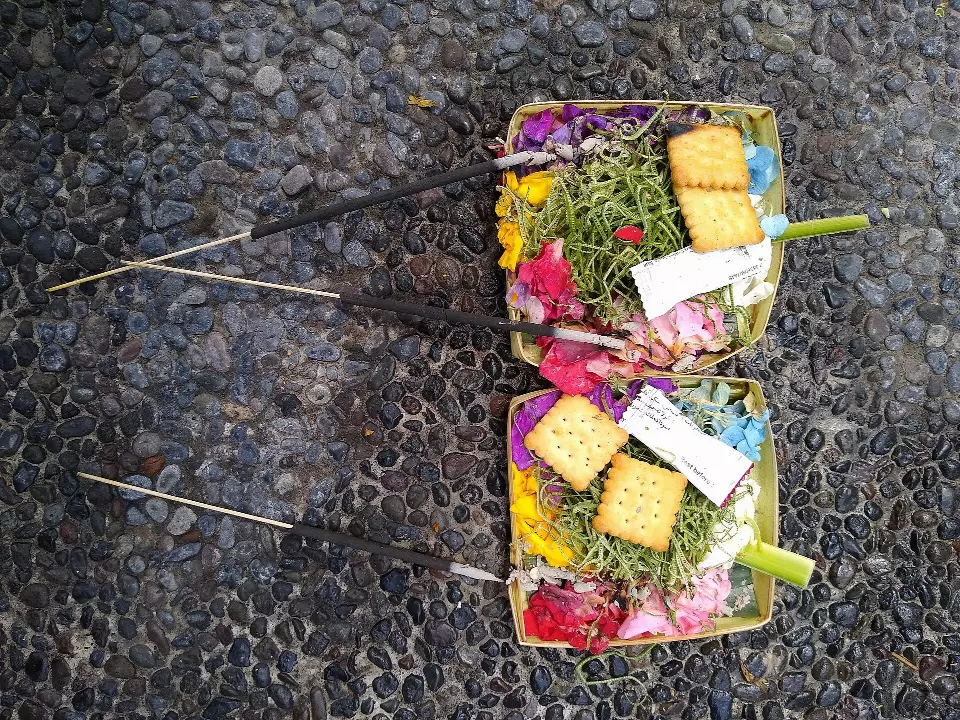
- Walk around offerings
- Rule source
- Governor’s Circular, 2025
- Penalties
- Fines to deportation
Some links are partner links: if you book through them we may earn a commission at no cost to you. Partners never choose what we recommend.
Bali is not just a resort. It is a deeply religious Hindu island where ceremonies happen every day, and most people are very patient with visitors. A few simple habits go a long way. Since March 2025, many of these habits have also been official rules for tourists, set out in a circular from the Governor of Bali, and they can be enforced.
At temples
- Wear a sarong and sash, and cover your shoulders. Many temples lend or rent them at the entrance.
- Stay out of the inner sanctums unless you are there to pray and dressed for it. Most areas that are closed will be marked.
- Do not climb on shrines, statues or walls, and never pose in a way that could be disrespectful.
- Keep your head below the priest's, and do not walk in front of people praying.
- Women who are menstruating are asked not to enter temples. People with open wounds or recently bereaved may also be asked to stay out.
- Follow the guide or staff during ceremonies, and step aside for processions.
Everyday manners
- Use your right hand to give, receive and eat. The left is considered unclean.
- Avoid touching people's heads, including children's.
- Dress modestly away from the beach. Swimwear is for the beach and the pool, and that includes shops and restaurants.
- Ask before photographing people, especially at ceremonies.
- Stay calm in disputes. Raising your voice rarely works here.
- When roads close for a ceremony, wait. It will pass.
The official rules for tourists, in short
Your ticks are saved on this device.
Do
Do not
Plan this trip
Partner links. Prices are approximate.
Nyepi: the day of silence
On Nyepi, which falls on 8 March 2027, all of Bali stops for 24 hours. There is no travel, no going to the beach, no noise and few lights, and that applies to visitors too. Your hotel will look after you, and local watchmen called pecalang enforce the rules.
Nature and sustainability
- Do not touch coral or stand on it, and keep your distance from turtles and mantas.
- Carry a refillable bottle, and refuse straws and plastic bags.
- Do not feed the monkeys.
- Support family-run businesses, and be wary of animal attractions that allow riding or touching.
Bargaining and money
Bargaining is normal in markets, but keep it friendly, and do not haggle hard over small sums. Prices in shops with tags and restaurants are fixed. Tipping is not expected, but it is always appreciated.
Read next: Balinese culture explained, Nyepi 2027, common Bali scams and things to do in Bali.
Etiquette FAQ
What should I wear to a temple in Bali?
A sarong and sash, with shoulders covered. Temples usually provide them, sometimes for a small fee or donation.
Can tourists enter Balinese temples?
You can visit the outer areas of many temples. The inner sacred zones are for worshippers.
What are the new rules for tourists in Bali?
The Governor's 2025 circular sets out what visitors must and must not do, covering the levy, dress, sacred sites, plastic and working illegally.
Is tipping expected in Bali?
It is not required, but small tips for drivers, guides and spa staff are welcome. Many restaurants already add a service charge.
Ready to book?
The usual order: flights, first nights, airport pickup, insurance, data.
Partner links. Prices are approximate.
Official sources
- Bali Provincial Tourism Office: Governor’s rules (official)(opens in a new tab)
- Love Bali tourist levy (official)(opens in a new tab)
Updated

Aleks & Ria
Authors of ogo!bali
Built by an expat and an Indonesian local, ogo!bali delivers clear, fresh advice from both sides of the island. We blend local insider secrets with practical travel tips to help you explore with confidence.