


Bali in January: Rain, Galungan 2027, Prices and What to Do in the Wettest Month
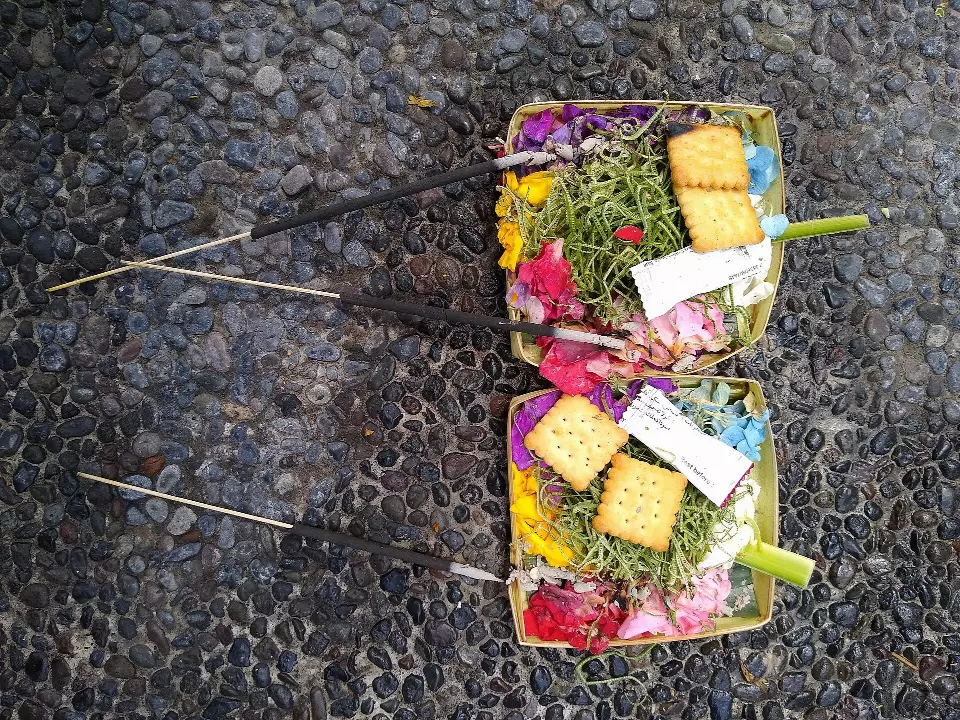
January is usually Bali’s wettest month, but rain comes in bursts, not all day. After the New Year rush, prices drop and the island is green and calm. In 2027, Galungan on 13 January fills the streets with penjor.
By Aleks & Ria Facts checked 11 November 2026 4 min read
- Season
- Wet, usually the wettest month
- Temperature
- About 24 to 31°C on the coast
- Busy
- 1 to about 6 January
- 2027 dates
- Galungan 13 Jan, Kuningan 23 Jan
Some links are partner links: if you book through them we may earn a commission at no cost to you. Partners never choose what we recommend.
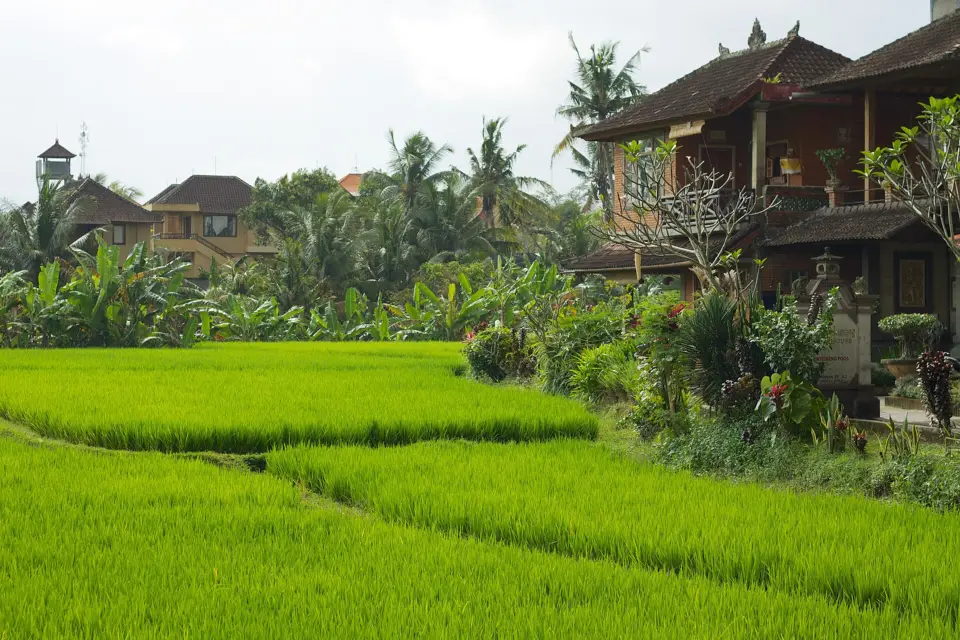
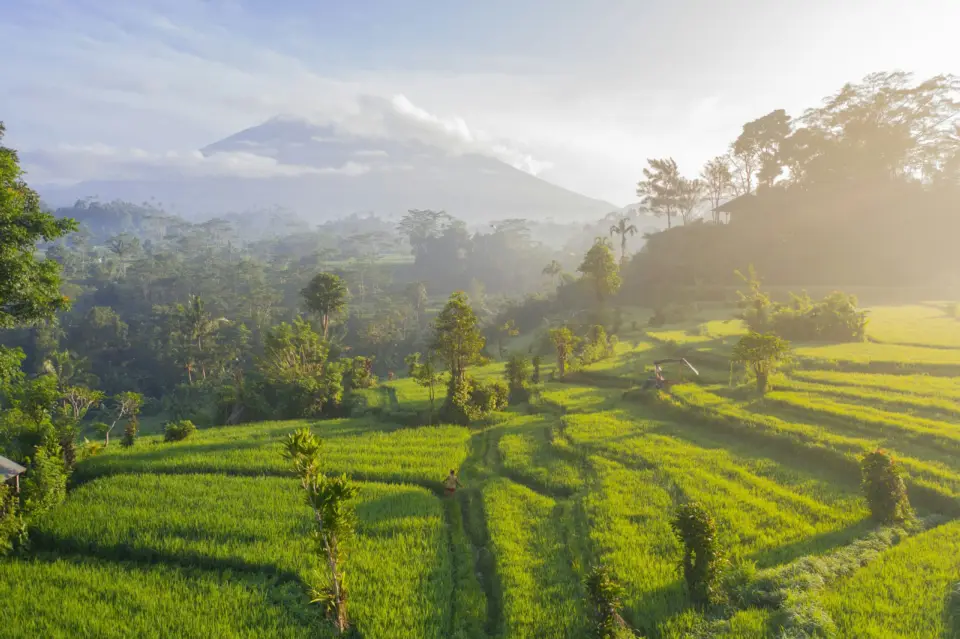
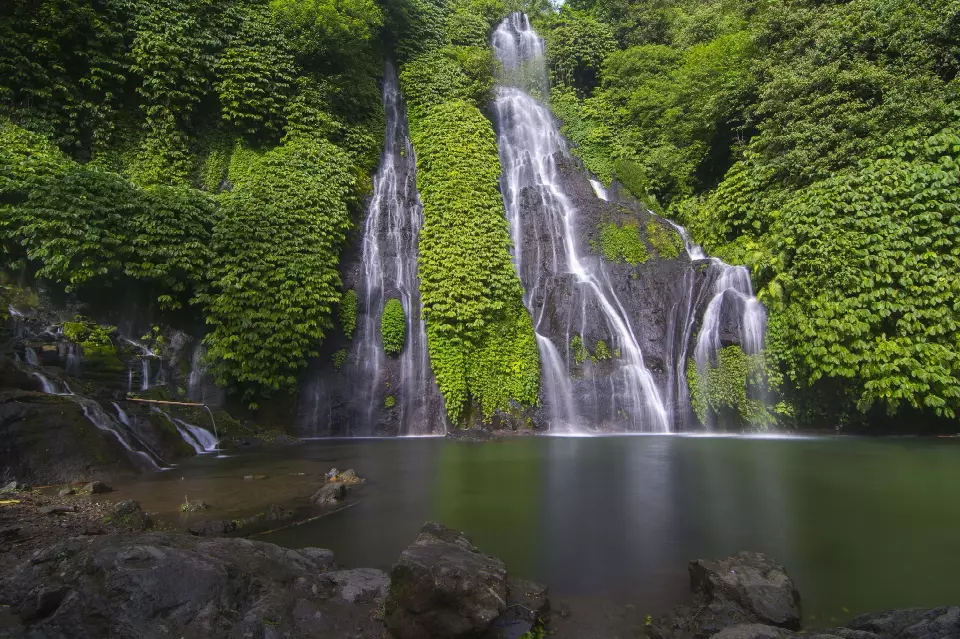
January sits at the height of Bali’s wet season, and on average it is the rainiest month of the year. That sounds worse than it is. Most days still have dry, bright spells, usually in the morning, with heavy showers or storms later in the day or overnight. The first week is busy with the end of the Christmas holidays. After that, the island empties out, prices fall and the rice fields and waterfalls are at their greenest. In 2027, January also brings Galungan, one of the most beautiful times to see Balinese village life.
January 2027 dates to know
-
Friday 1 January
- What
- New Year’s Day
- How it affects you
- National holiday after the New Year’s Eve parties; busy roads and beaches
-
Tuesday 5 January
- What
- Isra Mi’raj
- How it affects you
- National holiday; little changes in Bali
-
Tuesday 12 January
- What
- Penampahan Galungan
- How it affects you
- Penjor go up along village streets
-
Wednesday 13 January
- What
- Galungan
- How it affects you
- Busy temples, some small businesses close
-
Thursday 14 January
- What
- Manis Galungan
- How it affects you
- Family outings, busy beaches
-
Saturday 23 January
- What
- Kuningan
- How it affects you
- End of the Galungan period
All dates are in our [Bali calendar](/events/), which you can add to your phone. The [Galungan guide](/galungan-kuningan-bali/) explains what to expect.
Plan this trip
Partner links. Prices are approximate.
The weather
Expect warm, humid days of about 24 to 31°C on the coast, cooler in Ubud and the mountains. Rain often arrives as a heavy downpour lasting an hour or two, followed by sun. Some days are grey, and some weeks bring longer spells of rain when a tropical low passes far to the south. The sea is warm, around 28 to 29°C.
As in December, the wet-season wind usually blows from the west:
- The east coast, from Sanur to Nusa Dua and Keramas, is often calmer and cleaner, and it has the best surf of the season.
- The west coast, from Kuta to Canggu, can collect rubbish washed in from the sea after storms, especially in Kuta and Legian.
Crowds and prices
The first week of January is still peak season, with Australian, Indonesian and European holidays ending. From about 7 January, the change is sharp. Hotels discount, restaurants have free tables, and popular spots like Tegalalang and the Nusa Penida viewpoints are much quieter. Australian school holidays continue through January, so family resorts in Nusa Dua and Sanur stay fairly busy. Late January into February is one of the best-value times of the year.

What January is good for
- Rice fields and waterfalls: at their fullest. Paths are slippery and some falls close after heavy rain. See the waterfalls guide.
- Galungan: penjor along every village road, families in temple dress. Base yourself in Ubud or Sidemen to see the most.
- Spas, cooking classes and temples, which work in any weather. See cooking classes and the wellness guide.
- Surf on the east side, around Keramas and Sanur. See the surf guide.
- Value: quieter, cheaper rooms after the first week.
What is harder
- Boat crossings to Nusa Penida and the Gilis are cancelled more often. Keep a buffer day. See getting to Nusa Penida.
- Mount Batur is often in cloud at sunrise.
- Diving visibility drops after heavy rain near river mouths, though Tulamben and Amed are often still good.
- Health: mosquitoes are more active, and dengue is more common in the wet season. Use repellent day and night. Read the health and insurance guide.
How to plan a January trip
-
1
Pick your week
Avoid 1 to 6 January for value; aim for after the 7th, or plan around Galungan on 13 January.
-
2
Stay on the east side or in Ubud
Sanur, Nusa Dua and Ubud handle the wet season best. Canggu and Seminyak are fine, but beaches can be messy after storms.
-
3
Plan outdoor things for the morning
Temples, walks and beaches before lunch; spas, cafés and classes in the afternoon.
-
4
Build in buffer days
Never book an island boat the day before your flight home.
-
5
Pack for rain
A light rain jacket, quick-dry clothes, sandals and a dry bag. See the packing list.
Catch the post-holiday prices
From about 7 January, rooms are noticeably cheaper.
Partner links. Prices are approximate.
Comparing months? See Bali in December, Bali in February, Bali in July, Bali in August and the best time to visit Bali. Torn between destinations? Read Bali or Thailand.
Search flights to Bali
Partner widget. Prices come from the partner.
Bali in January FAQ
Is January a good time to visit Bali?
Yes, if you accept rain. After the first week it is quiet, green and good value, and in 2027 Galungan falls on 13 January.
Does it rain all day in Bali in January?
Rarely. Most days have dry spells, with heavy showers in the afternoon or at night.
Is January the rainiest month in Bali?
On average, yes, with December and February close behind.
Is Bali crowded in January?
The first week is very busy. From about 7 January it gets much quieter.
Which part of Bali is best in January?
The east coast, from Sanur to Nusa Dua, is often calmer and cleaner. Ubud is lovely and green.
When is Galungan in January 2027?
Wednesday 13 January 2027, with Kuningan on Saturday 23 January.
Ready to book?
The usual order: flights, first nights, airport pickup, insurance, data.
Partner links. Prices are approximate.
Official sources
- BMKG: Indonesian weather agency(opens in a new tab)
- Ministry of State Secretariat: 2027 national holidays(opens in a new tab)
- Bali Provincial Government(opens in a new tab)
Updated

Aleks & Ria
Authors of ogo!bali
Built by an expat and an Indonesian local, ogo!bali delivers clear, fresh advice from both sides of the island. We blend local insider secrets with practical travel tips to help you explore with confidence.